

LARGER VIALS = LARGER SAVINGS PER mg
Epithalon
Epithalon
Regular price
$52.00
Regular price
$52.00
Sale price
Unit price
per
Lab-Tested 99% Purity
Fast, Discreet Shipping
For Research Use Only
-
Ordered
- - -
Order Ready
- - -
Delivered
Couldn't load pickup availability

Epithalon
Regular price
$52.00
Regular price
$52.00
Sale price
Unit price
per
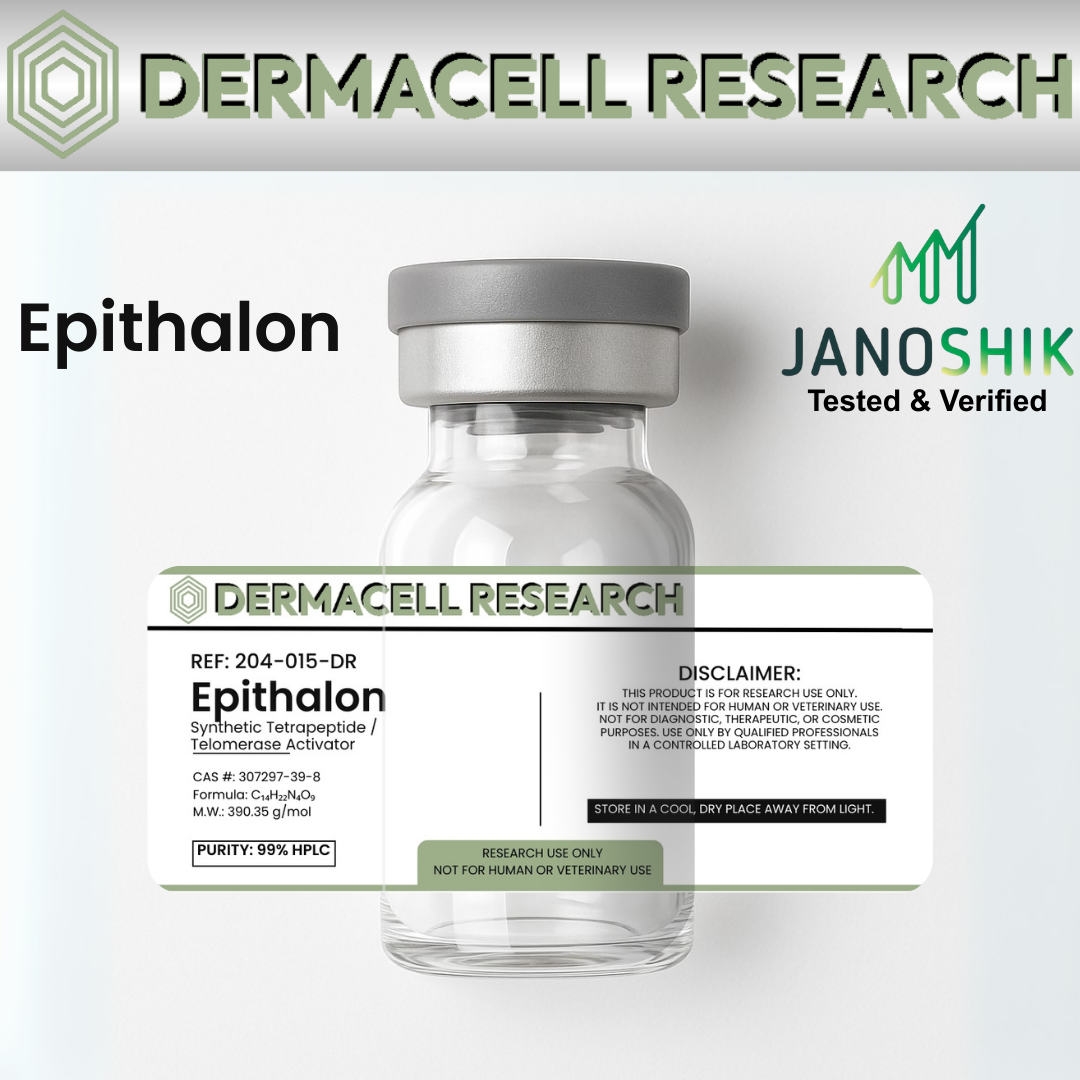
Epithalon (Epitalon, Epithalamin) is a synthetic tetrapeptide (Ala-Glu-Asp-Gly) derived from the natural pineal peptide Epithalamin. It has been studied for its potential to regulate telomerase activity, promote genomic stability, and exert antioxidant and anti-aging effects in cellular and animal models.
1. Khavinson V, et al. Peptide regulation of aging: Epithalamin and Epitalon effects on lifespan. Ann N Y Acad Sci. 1998;854:448–460. doi:10.1111/j.1749-6632.1998.tb09916.x
2. Khavinson V, Anisimov V. Peptide Epitalon regulates telomerase activity in human somatic cells. Bull Exp Biol Med. 2003;135(6):590–592. doi:10.1023/A:1026004713820
3. Khavinson V, et al. Epitalon increases lifespan of mice and rats. Neuro Endocrinol Lett. 2000;21(3):233–240. PMID: 10958372
4. Anisimov VN, Khavinson V. Epitalon effects on spontaneous carcinogenesis in rodents. Exp Gerontol. 2001;36(2):293–302. doi:10.1016/S0531-5565(00)00209-0
5. Khavinson V, Lin’kova N. Peptide regulation of genome stability and telomeres. Adv Gerontol. 2006;18:25–31. PMID: 16708512
6. Vaiserman A, et al. Epitalon and aging biomarkers in elderly people. Biogerontology. 2003;4(4):193–202. doi:10.1023/A:1025102009406
7. Anisimov VN, et al. Effect of Epitalon on pineal function and lifespan in rodents. Mech Ageing Dev. 2001;122(3):241–252. doi:10.1016/S0047-6374(00)00231-0
8. Khavinson V, Linkova N, et al. Peptide regulation of antioxidant defense with Epithalon. Bull Exp Biol Med. 2004;137(1):64–66. doi:10.1023/B:BEBM.0000014950.30435.39
9. Khavinson V, Tarnovskaya S. Immunomodulating properties of Epitalon in elderly humans. Bull Exp Biol Med. 2002;133(6):627–629. doi:10.1023/A:1020239910588
10. Anisimov VN, et al. Epitalon effects on circadian rhythms and melatonin in aging primates. Neuro Endocrinol Lett. 2004;25(5):432–435. PMID: 15580168
2. Khavinson V, Anisimov V. Peptide Epitalon regulates telomerase activity in human somatic cells. Bull Exp Biol Med. 2003;135(6):590–592. doi:10.1023/A:1026004713820
3. Khavinson V, et al. Epitalon increases lifespan of mice and rats. Neuro Endocrinol Lett. 2000;21(3):233–240. PMID: 10958372
4. Anisimov VN, Khavinson V. Epitalon effects on spontaneous carcinogenesis in rodents. Exp Gerontol. 2001;36(2):293–302. doi:10.1016/S0531-5565(00)00209-0
5. Khavinson V, Lin’kova N. Peptide regulation of genome stability and telomeres. Adv Gerontol. 2006;18:25–31. PMID: 16708512
6. Vaiserman A, et al. Epitalon and aging biomarkers in elderly people. Biogerontology. 2003;4(4):193–202. doi:10.1023/A:1025102009406
7. Anisimov VN, et al. Effect of Epitalon on pineal function and lifespan in rodents. Mech Ageing Dev. 2001;122(3):241–252. doi:10.1016/S0047-6374(00)00231-0
8. Khavinson V, Linkova N, et al. Peptide regulation of antioxidant defense with Epithalon. Bull Exp Biol Med. 2004;137(1):64–66. doi:10.1023/B:BEBM.0000014950.30435.39
9. Khavinson V, Tarnovskaya S. Immunomodulating properties of Epitalon in elderly humans. Bull Exp Biol Med. 2002;133(6):627–629. doi:10.1023/A:1020239910588
10. Anisimov VN, et al. Epitalon effects on circadian rhythms and melatonin in aging primates. Neuro Endocrinol Lett. 2004;25(5):432–435. PMID: 15580168