

LARGER VIALS = LARGER SAVINGS PER mg
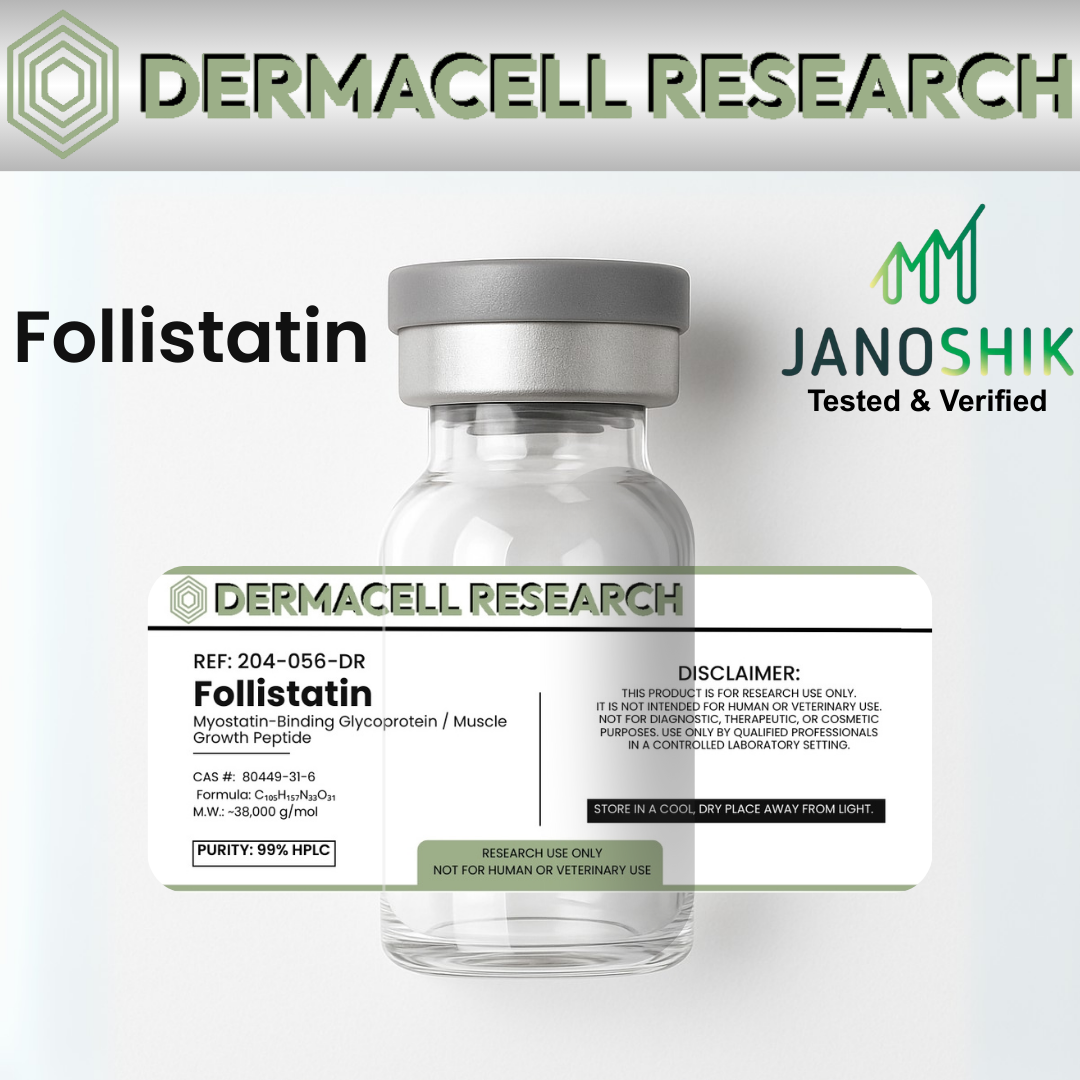
Follistatin
Follistatin
Regular price
$112.00
Regular price
$112.00
Sale price
Unit price
per
Lab-Tested 99% Purity
Fast, Discreet Shipping
For Research Use Only
-
Ordered
- - -
Order Ready
- - -
Delivered
Couldn't load pickup availability

Follistatin
Regular price
$112.00
Regular price
$112.00
Sale price
Unit price
per
Follistatin is a glycoprotein that binds and neutralizes members of the TGF-β superfamily, particularly myostatin and activin. By inhibiting these signaling pathways, it has been investigated for its ability to promote muscle growth, enhance regeneration, and modulate reproductive and metabolic processes.
1. Lee SJ, McPherron AC. Regulation of myostatin activity and muscle growth by Follistatin. Proc Natl Acad Sci U S A. 2001;98(16):9306–9311. doi:10.1073/pnas.151270098
2. Haidet AM, et al. Long-term enhancement of skeletal muscle mass and strength by Follistatin gene delivery. Nat Med. 2008;14(4):442–446. doi:10.1038/nm1739
3. Amthor H, et al. Muscle hypertrophy driven by Follistatin antagonism of myostatin. EMBO J. 2004;23(3):479–489. doi:10.1038/sj.emboj.7600291
4. Zhu J, et al. Recombinant Follistatin enhances muscle regeneration and strength after injury. Mol Ther. 2011;19(1):103–111. doi:10.1038/mt.2010.221
5. Nakatani M, et al. Transgenic expression of a Follistatin-derived peptide increases muscle mass. Nat Biotechnol. 2008;26(3):313–319. doi:10.1038/nbt1384
6. Braga M, et al. Follistatin promotes brown adipose tissue function and metabolic health. Nat Commun. 2014;5:4676. doi:10.1038/ncomms5676
7. Yaden BC, et al. Follistatin administration improves glucose homeostasis in mice. Endocrinology. 2014;155(6):2109–2121. doi:10.1210/en.2013-2046
8. Schneyer AL, et al. Follistatin antagonism of activin regulates reproductive physiology. Endocr Rev. 2004;25(5):856–874. doi:10.1210/er.2003-0035
9. Patel K, Amthor H. The function of myostatin and Follistatin in muscle development. Novartis Found Symp. 2000;225:109–116. doi:10.1002/0470846534.ch8
10. Elashry MI, et al. Anti-fibrotic effects of Follistatin in liver and kidney injury models. Front Pharmacol. 2022;13:846139. doi:10.3389/fphar.2022.846139
2. Haidet AM, et al. Long-term enhancement of skeletal muscle mass and strength by Follistatin gene delivery. Nat Med. 2008;14(4):442–446. doi:10.1038/nm1739
3. Amthor H, et al. Muscle hypertrophy driven by Follistatin antagonism of myostatin. EMBO J. 2004;23(3):479–489. doi:10.1038/sj.emboj.7600291
4. Zhu J, et al. Recombinant Follistatin enhances muscle regeneration and strength after injury. Mol Ther. 2011;19(1):103–111. doi:10.1038/mt.2010.221
5. Nakatani M, et al. Transgenic expression of a Follistatin-derived peptide increases muscle mass. Nat Biotechnol. 2008;26(3):313–319. doi:10.1038/nbt1384
6. Braga M, et al. Follistatin promotes brown adipose tissue function and metabolic health. Nat Commun. 2014;5:4676. doi:10.1038/ncomms5676
7. Yaden BC, et al. Follistatin administration improves glucose homeostasis in mice. Endocrinology. 2014;155(6):2109–2121. doi:10.1210/en.2013-2046
8. Schneyer AL, et al. Follistatin antagonism of activin regulates reproductive physiology. Endocr Rev. 2004;25(5):856–874. doi:10.1210/er.2003-0035
9. Patel K, Amthor H. The function of myostatin and Follistatin in muscle development. Novartis Found Symp. 2000;225:109–116. doi:10.1002/0470846534.ch8
10. Elashry MI, et al. Anti-fibrotic effects of Follistatin in liver and kidney injury models. Front Pharmacol. 2022;13:846139. doi:10.3389/fphar.2022.846139