

LARGER VIALS = LARGER SAVINGS PER mg
Glow Blend
Glow Blend
Regular price
$100.00
Regular price
$100.00
Sale price
Unit price
per
Lab-Tested 99% Purity
Fast, Discreet Shipping
For Research Use Only
-
Ordered
- - -
Order Ready
- - -
Delivered
Couldn't load pickup availability

Glow Blend
Regular price
$100.00
Regular price
$100.00
Sale price
Unit price
per
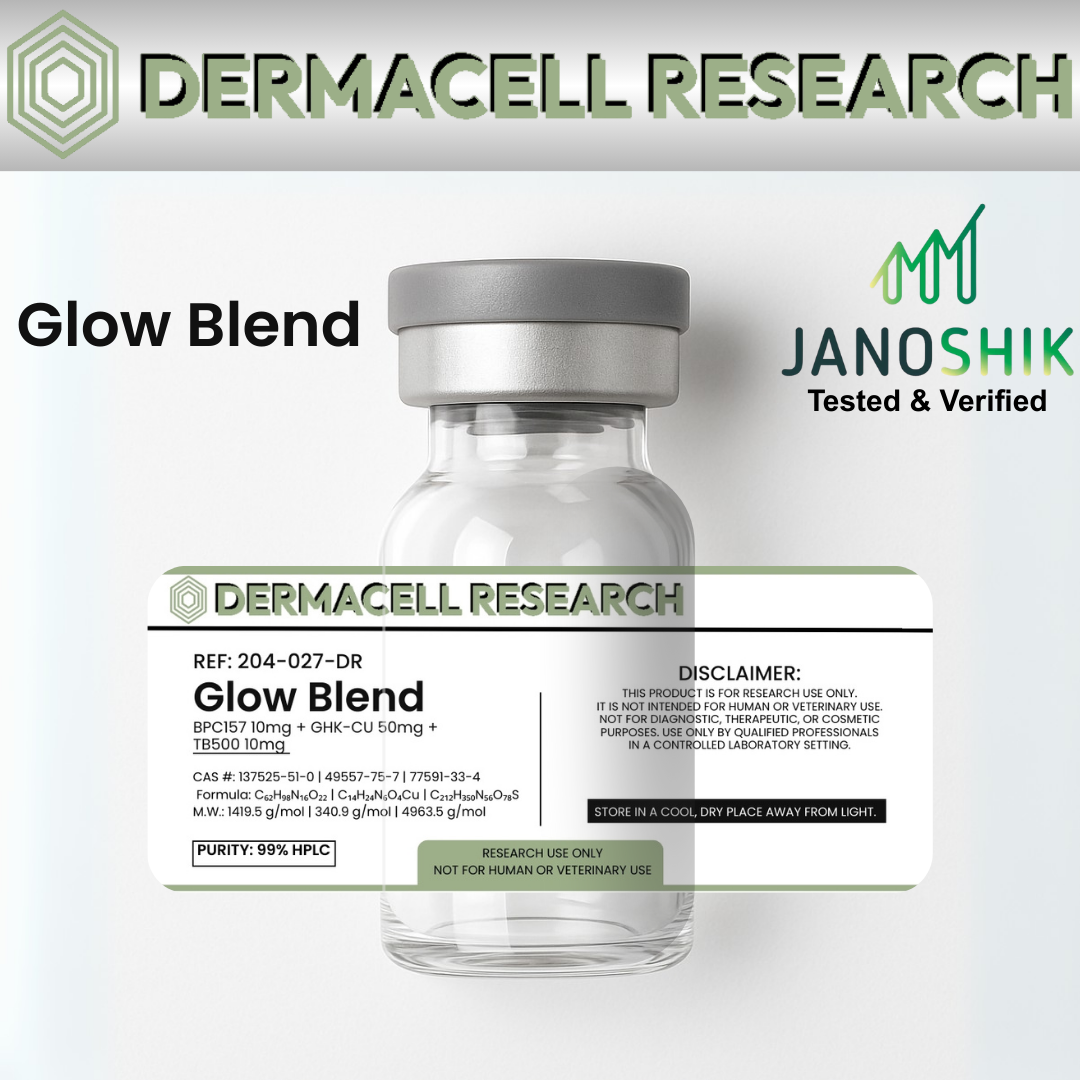
Glow Blend is a peptide formulation containing BPC-157 (10 mg), GHK-Cu (50 mg), and TB-500 (10 mg). It is being studied for its potential combined effects on tissue regeneration, wound healing, angiogenesis, and skin rejuvenation through the complementary actions of its components.
1. Sikiric P, et al. Stable gastric pentadecapeptide BPC-157: healing of GI lesions and tissue protection. World J Gastroenterol. 2010;16(24):3103–3110. doi:10.3748/wjg.v16.i24.3103
2. Staresinic M, et al. BPC-157 accelerates healing of tendon and ligament injuries. J Orthop Res. 2003;21(5):976–983. doi:10.1016/S0736-0266(03)00046-6
3. Vukojevic J, et al. BPC-157 interactions with the NO-system in vascular protection. PLoS One. 2014;9(12):e116062. doi:10.1371/journal.pone.0116062
4. Pickart L, Margolina A. GHK-Cu: peptide regulation of gene expression, tissue remodeling, and anti-cancer pathways. Biomed Res Int. 2014;2014:151479. doi:10.1155/2014/151479
5. Maquart FX, et al. GHK-Cu stimulates collagen and glycosaminoglycan synthesis in fibroblasts. FEBS Lett. 1988;238(2):343–346. doi:10.1016/0014-5793(88)80476-3
6. Siméon A, et al. GHK-Cu and tissue remodeling: activation of proteoglycan synthesis. J Invest Dermatol. 2000;115(6):962–968. doi:10.1046/j.1523-1747.2000.00164.x
7. Goldstein AL, et al. Thymosin beta-4 in tissue regeneration and angiogenesis. Ann N Y Acad Sci. 2010;1194:87–96. doi:10.1111/j.1749-6632.2010.05477.x
8. Malinda KM, et al. Thymosin beta-4 accelerates wound healing by stimulating angiogenesis and cell migration. J Invest Dermatol. 1999;113(3):364–372. doi:10.1046/j.1523-1747.1999.00708.x
9. Philp D, et al. Thymosin beta-4 promotes dermal healing by remodeling extracellular matrix. J Invest Dermatol. 2003;121(4):694–701. doi:10.1046/j.1523-1747.2003.12471.x
10. Brcic L, et al. BPC-157, GHK-Cu, and TB-500: combined perspectives in regenerative peptide research. Curr Pharm Des. 2018;24(18):2025–2037. doi:10.2174/1381612824666180703111730
2. Staresinic M, et al. BPC-157 accelerates healing of tendon and ligament injuries. J Orthop Res. 2003;21(5):976–983. doi:10.1016/S0736-0266(03)00046-6
3. Vukojevic J, et al. BPC-157 interactions with the NO-system in vascular protection. PLoS One. 2014;9(12):e116062. doi:10.1371/journal.pone.0116062
4. Pickart L, Margolina A. GHK-Cu: peptide regulation of gene expression, tissue remodeling, and anti-cancer pathways. Biomed Res Int. 2014;2014:151479. doi:10.1155/2014/151479
5. Maquart FX, et al. GHK-Cu stimulates collagen and glycosaminoglycan synthesis in fibroblasts. FEBS Lett. 1988;238(2):343–346. doi:10.1016/0014-5793(88)80476-3
6. Siméon A, et al. GHK-Cu and tissue remodeling: activation of proteoglycan synthesis. J Invest Dermatol. 2000;115(6):962–968. doi:10.1046/j.1523-1747.2000.00164.x
7. Goldstein AL, et al. Thymosin beta-4 in tissue regeneration and angiogenesis. Ann N Y Acad Sci. 2010;1194:87–96. doi:10.1111/j.1749-6632.2010.05477.x
8. Malinda KM, et al. Thymosin beta-4 accelerates wound healing by stimulating angiogenesis and cell migration. J Invest Dermatol. 1999;113(3):364–372. doi:10.1046/j.1523-1747.1999.00708.x
9. Philp D, et al. Thymosin beta-4 promotes dermal healing by remodeling extracellular matrix. J Invest Dermatol. 2003;121(4):694–701. doi:10.1046/j.1523-1747.2003.12471.x
10. Brcic L, et al. BPC-157, GHK-Cu, and TB-500: combined perspectives in regenerative peptide research. Curr Pharm Des. 2018;24(18):2025–2037. doi:10.2174/1381612824666180703111730