

LARGER VIALS = LARGER SAVINGS PER mg
Kisspeptin-10
Kisspeptin-10
Regular price
$52.00
Regular price
$52.00
Sale price
Unit price
per
Lab-Tested 99% Purity
Fast, Discreet Shipping
For Research Use Only
-
Ordered
- - -
Order Ready
- - -
Delivered
Couldn't load pickup availability

Kisspeptin-10
Regular price
$52.00
Regular price
$52.00
Sale price
Unit price
per
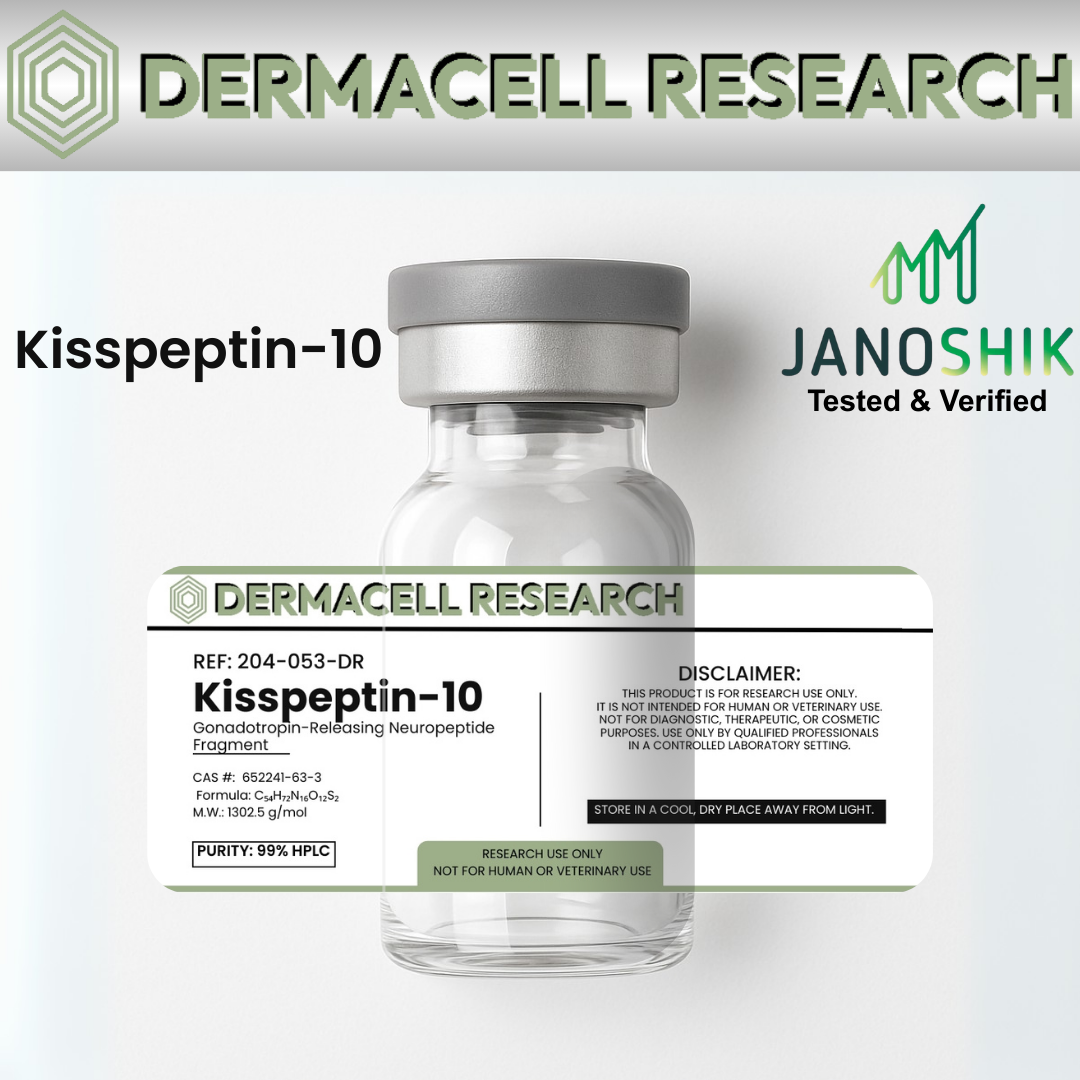
Kisspeptin-10 is a synthetic decapeptide fragment of the kisspeptin protein family that plays a critical role in regulating the hypothalamic-pituitary-gonadal (HPG) axis. It stimulates the release of gonadotropin-releasing hormone (GnRH), thereby influencing reproductive hormone secretion and fertility.
1. Kotani M, et al. The metastasis suppressor gene product KiSS-1 is a ligand of the orphan G-protein-coupled receptor GPR54. *J Biol Chem*. 2001;276(27):34631–34636. doi:10.1074/jbc.M104847200
2. Seminara SB, et al. The GPR54 gene as a regulator of puberty. *N Engl J Med*. 2003;349(17):1614–1627. doi:10.1056/NEJMoa035322
3. Navarro VM, et al. Direct action of kisspeptins on GnRH neurons. *Proc Natl Acad Sci U S A*. 2005;102(48):17601–17606. doi:10.1073/pnas.0507902102
4. Jayasena CN, et al. Kisspeptin-54 triggers gonadotropin release in men. *J Clin Endocrinol Metab*. 2009;94(12):5116–5125. doi:10.1210/jc.2009-1320
5. George JT, et al. Kisspeptin-10 stimulates GnRH release in women with hypothalamic amenorrhea. *J Clin Endocrinol Metab*. 2011;96(3):E536–E545. doi:10.1210/jc.2010-2690
6. Dhillo WS, et al. Kisspeptin as a novel therapeutic for reproductive health. *Trends Endocrinol Metab*. 2007;18(9):448–454. doi:10.1016/j.tem.2007.10.001
7. Mead EJ, Maguire JJ, Kuc RE, Davenport AP. Kisspeptins are novel vasoconstrictors in humans. *Br J Pharmacol*. 2007;151(5):707–717. doi:10.1038/sj.bjp.0707289
8. Stafford LJ, et al. The metastasis suppressor gene KiSS-1 in cancer. *Cancer Res*. 2002;62(21):5934–5938. PMID: 12384551
9. d’Anglemont de Tassigny X, Colledge WH. The role of kisspeptin signaling in reproductive function. *Endocrinology*. 2010;151(9):3765–3773. doi:10.1210/en.2010-0026
10. Chan YM, et al. Kisspeptin resets the GnRH pulse generator in humans. *J Clin Endocrinol Metab*. 2011;96(8):E1212–E1221. doi:10.1210/jc.2011-0066
2. Seminara SB, et al. The GPR54 gene as a regulator of puberty. *N Engl J Med*. 2003;349(17):1614–1627. doi:10.1056/NEJMoa035322
3. Navarro VM, et al. Direct action of kisspeptins on GnRH neurons. *Proc Natl Acad Sci U S A*. 2005;102(48):17601–17606. doi:10.1073/pnas.0507902102
4. Jayasena CN, et al. Kisspeptin-54 triggers gonadotropin release in men. *J Clin Endocrinol Metab*. 2009;94(12):5116–5125. doi:10.1210/jc.2009-1320
5. George JT, et al. Kisspeptin-10 stimulates GnRH release in women with hypothalamic amenorrhea. *J Clin Endocrinol Metab*. 2011;96(3):E536–E545. doi:10.1210/jc.2010-2690
6. Dhillo WS, et al. Kisspeptin as a novel therapeutic for reproductive health. *Trends Endocrinol Metab*. 2007;18(9):448–454. doi:10.1016/j.tem.2007.10.001
7. Mead EJ, Maguire JJ, Kuc RE, Davenport AP. Kisspeptins are novel vasoconstrictors in humans. *Br J Pharmacol*. 2007;151(5):707–717. doi:10.1038/sj.bjp.0707289
8. Stafford LJ, et al. The metastasis suppressor gene KiSS-1 in cancer. *Cancer Res*. 2002;62(21):5934–5938. PMID: 12384551
9. d’Anglemont de Tassigny X, Colledge WH. The role of kisspeptin signaling in reproductive function. *Endocrinology*. 2010;151(9):3765–3773. doi:10.1210/en.2010-0026
10. Chan YM, et al. Kisspeptin resets the GnRH pulse generator in humans. *J Clin Endocrinol Metab*. 2011;96(8):E1212–E1221. doi:10.1210/jc.2011-0066