

LARGER VIALS = LARGER SAVINGS PER mg
MOTS-c
MOTS-c
Regular price
$52.00
Regular price
$52.00
Sale price
Unit price
per
Lab-Tested 99% Purity
Fast, Discreet Shipping
For Research Use Only
-
Ordered
- - -
Order Ready
- - -
Delivered
Couldn't load pickup availability

MOTS-c
Regular price
$52.00
Regular price
$52.00
Sale price
Unit price
per
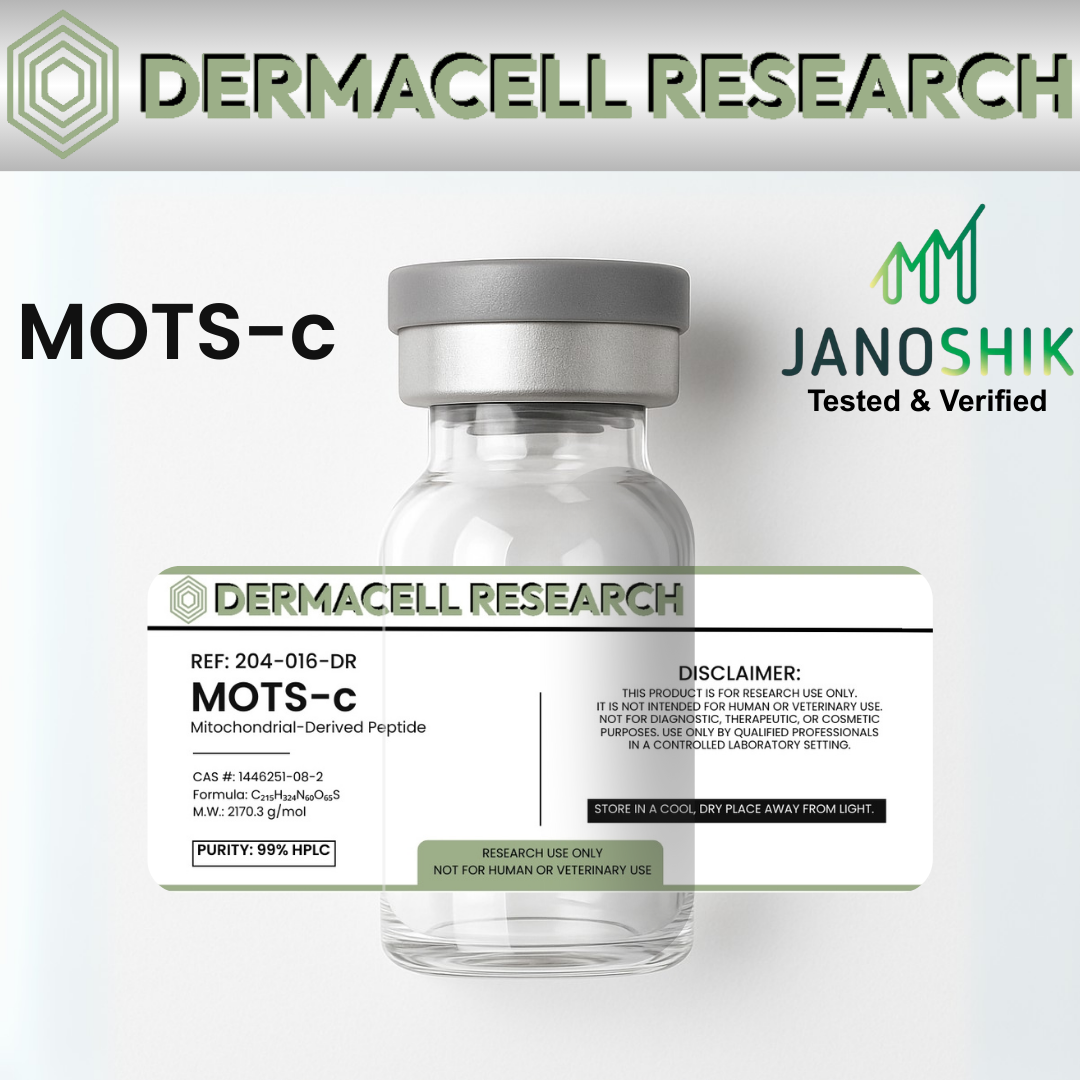
MOTS-c is a 16–amino acid peptide encoded by mitochondrial DNA that regulates cellular energy metabolism. It has been studied for its ability to enhance insulin sensitivity, promote fatty acid oxidation, and protect against metabolic stress, linking mitochondrial function to systemic metabolic health.
1. Lee C, et al. The mitochondrial-derived peptide MOTS-c promotes metabolic homeostasis and reduces obesity. *Cell Metab*. 2015;21(3):443–454. doi:10.1016/j.cmet.2015.02.009
2. Reynolds JC, et al. MOTS-c is an exercise-induced mitochondrial-encoded regulator of age-dependent physical decline and muscle homeostasis. *Nat Commun*. 2021;12(1):470. doi:10.1038/s41467-020-20790-0
3. Kim KH, et al. MOTS-c: a novel mitochondrial-derived peptide regulating muscle and metabolic homeostasis. *Free Radic Biol Med*. 2018;100:182–187. doi:10.1016/j.freeradbiomed.2016.04.023
4. Zarse K, et al. Mitochondrial peptides as mediators of inter-organelle signaling: role of MOTS-c. *Aging Cell*. 2019;18(2):e12845. doi:10.1111/acel.12845
5. Lu H, et al. MOTS-c prevents diet-induced obesity and insulin resistance in mice. *Aging (Albany NY)*. 2018;10(11): 1–12. doi:10.18632/aging.101630
6. Yong C, et al. MOTS-c improves insulin resistance by activating AMPK and enhancing glucose uptake. *Biochem Biophys Res Commun*. 2016;473(2):425–431. doi:10.1016/j.bbrc.2016.03.109
7. Ramanjaneya M, et al. Circulating MOTS-c levels in aging and metabolic disease. *Clin Endocrinol (Oxf)*. 2019;91(5):697–705. doi:10.1111/cen.14089
8. Miller B, et al. MOTS-c enhances exercise performance and muscle metabolism. *J Cachexia Sarcopenia Muscle*. 2021;12(6):1642–1656. doi:10.1002/jcsm.12748
9. Zhao Y, et al. MOTS-c as a potential therapeutic peptide for age-related disease. *Front Endocrinol (Lausanne)*. 2019;10:438. doi:10.3389/fendo.2019.00438
10. Du C, et al. MOTS-c as a regulator of mitochondrial signaling and metabolic adaptation. *Trends Endocrinol Metab*. 2022;33(1):25–37. doi:10.1016/j.tem.2021.10.001
2. Reynolds JC, et al. MOTS-c is an exercise-induced mitochondrial-encoded regulator of age-dependent physical decline and muscle homeostasis. *Nat Commun*. 2021;12(1):470. doi:10.1038/s41467-020-20790-0
3. Kim KH, et al. MOTS-c: a novel mitochondrial-derived peptide regulating muscle and metabolic homeostasis. *Free Radic Biol Med*. 2018;100:182–187. doi:10.1016/j.freeradbiomed.2016.04.023
4. Zarse K, et al. Mitochondrial peptides as mediators of inter-organelle signaling: role of MOTS-c. *Aging Cell*. 2019;18(2):e12845. doi:10.1111/acel.12845
5. Lu H, et al. MOTS-c prevents diet-induced obesity and insulin resistance in mice. *Aging (Albany NY)*. 2018;10(11): 1–12. doi:10.18632/aging.101630
6. Yong C, et al. MOTS-c improves insulin resistance by activating AMPK and enhancing glucose uptake. *Biochem Biophys Res Commun*. 2016;473(2):425–431. doi:10.1016/j.bbrc.2016.03.109
7. Ramanjaneya M, et al. Circulating MOTS-c levels in aging and metabolic disease. *Clin Endocrinol (Oxf)*. 2019;91(5):697–705. doi:10.1111/cen.14089
8. Miller B, et al. MOTS-c enhances exercise performance and muscle metabolism. *J Cachexia Sarcopenia Muscle*. 2021;12(6):1642–1656. doi:10.1002/jcsm.12748
9. Zhao Y, et al. MOTS-c as a potential therapeutic peptide for age-related disease. *Front Endocrinol (Lausanne)*. 2019;10:438. doi:10.3389/fendo.2019.00438
10. Du C, et al. MOTS-c as a regulator of mitochondrial signaling and metabolic adaptation. *Trends Endocrinol Metab*. 2022;33(1):25–37. doi:10.1016/j.tem.2021.10.001