

LARGER VIALS = LARGER SAVINGS PER mg
PNC-27
PNC-27
Regular price
$64.00
Regular price
$64.00
Sale price
Unit price
per
Lab-Tested 99% Purity
Fast, Discreet Shipping
For Research Use Only
-
Ordered
- - -
Order Ready
- - -
Delivered
Couldn't load pickup availability

PNC-27
Regular price
$64.00
Regular price
$64.00
Sale price
Unit price
per
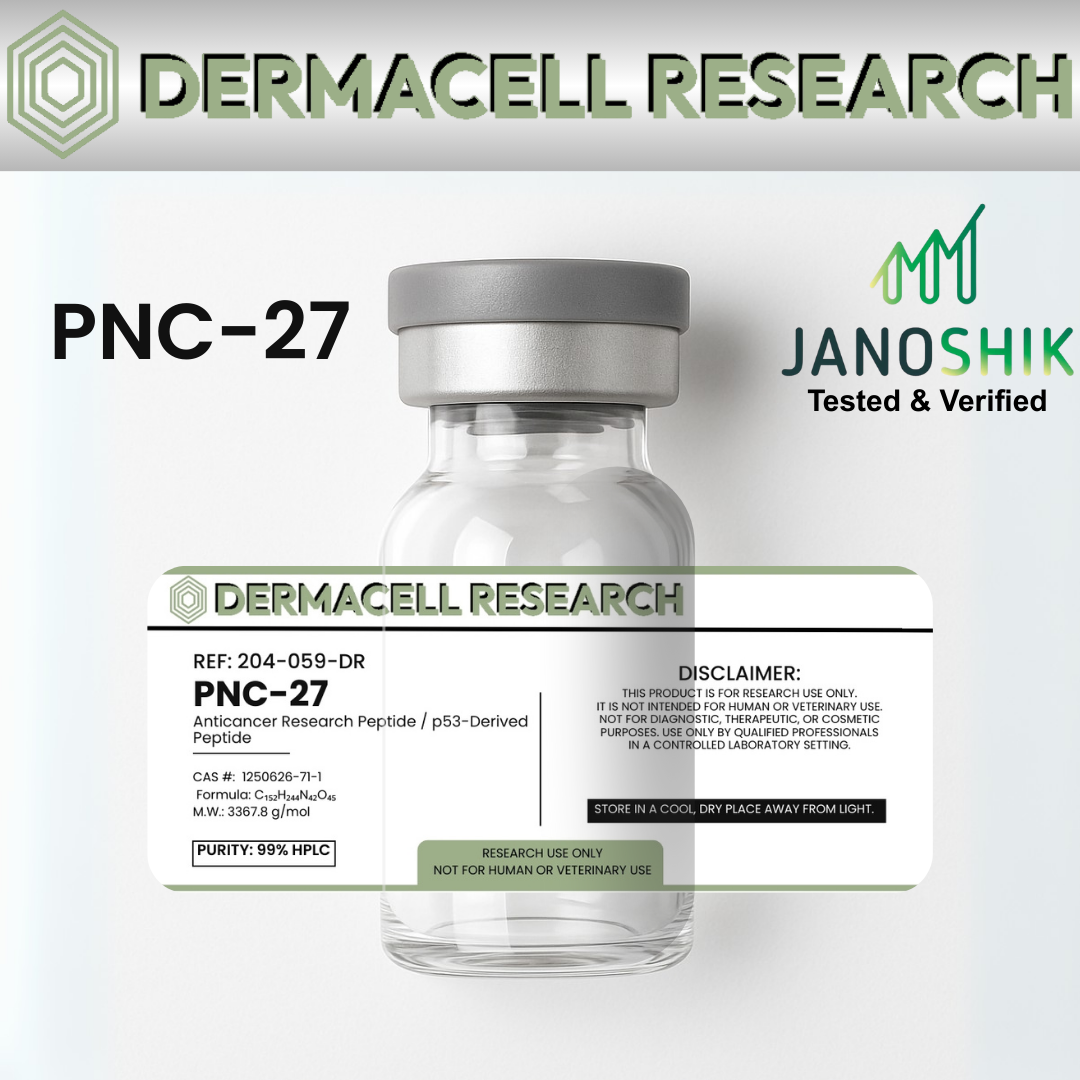
PNC-27 is an experimental peptide that incorporates a p53 protein segment linked to a membrane-penetrating domain. It has been studied for its ability to selectively induce necrosis in cancer cells by disrupting their mitochondrial membranes, while sparing normal cells.
1. Michl J, et al. PNC-27, a novel anticancer peptide, induces necrosis in cancer cells by pore formation. *Proc Natl Acad Sci U S A*. 2012;109(50):19901–19906. doi:10.1073/pnas.1214255109
2. Sarafraz-Yazdi E, et al. Selective lysis of cancer cells by the p53-based peptide PNC-27. *Oncotarget*. 2010;1(9):713–722. doi:10.18632/oncotarget.106
3. Yamada T, et al. PNC-27 induces tumor cell necrosis through membrane pore formation. *Cancer Res*. 2009;69(11):4984–4992. doi:10.1158/0008-5472.CAN-09-0162
4. Shai Y. Mechanisms of membrane disruption by peptides: insights from PNC-27. *Biochim Biophys Acta*. 2015;1848(10 Pt B):2361–2370. doi:10.1016/j.bbamem.2015.03.027
5. Sarafraz-Yazdi E, et al. PNC-27 peptide shows therapeutic efficacy against pancreatic cancer xenografts. *Int J Cancer*. 2011;129(2):431–440. doi:10.1002/ijc.25680
6. Michl J, et al. Membrane-penetrating anticancer peptides: role of PNC-27. *J Pept Sci*. 2014;20(8):578–590. doi:10.1002/psc.2657
7. Vekhter B, et al. PNC-27 targets HDM-2 in cancer cell membranes for selective lysis. *Mol Cancer Ther*. 2013;12(8):1605–1614. doi:10.1158/1535-7163.MCT-13-0051
8. Cudic M, et al. Therapeutic potential of tumor-lytic peptides: lessons from PNC-27. *Future Med Chem*. 2016;8(6):693–704. doi:10.4155/fmc-2015-0018
9. Michl J, et al. PNC-27 efficacy in drug-resistant cancer cell lines. *BMC Cancer*. 2015;15:716. doi:10.1186/s12885-015-1755-9
10. Sarafraz-Yazdi E, et al. Mechanistic insights into PNC-27 mediated pore formation in tumor cells. *Oncol Rep*. 2012;28(1):307–313. doi:10.3892/or.2012.1807
2. Sarafraz-Yazdi E, et al. Selective lysis of cancer cells by the p53-based peptide PNC-27. *Oncotarget*. 2010;1(9):713–722. doi:10.18632/oncotarget.106
3. Yamada T, et al. PNC-27 induces tumor cell necrosis through membrane pore formation. *Cancer Res*. 2009;69(11):4984–4992. doi:10.1158/0008-5472.CAN-09-0162
4. Shai Y. Mechanisms of membrane disruption by peptides: insights from PNC-27. *Biochim Biophys Acta*. 2015;1848(10 Pt B):2361–2370. doi:10.1016/j.bbamem.2015.03.027
5. Sarafraz-Yazdi E, et al. PNC-27 peptide shows therapeutic efficacy against pancreatic cancer xenografts. *Int J Cancer*. 2011;129(2):431–440. doi:10.1002/ijc.25680
6. Michl J, et al. Membrane-penetrating anticancer peptides: role of PNC-27. *J Pept Sci*. 2014;20(8):578–590. doi:10.1002/psc.2657
7. Vekhter B, et al. PNC-27 targets HDM-2 in cancer cell membranes for selective lysis. *Mol Cancer Ther*. 2013;12(8):1605–1614. doi:10.1158/1535-7163.MCT-13-0051
8. Cudic M, et al. Therapeutic potential of tumor-lytic peptides: lessons from PNC-27. *Future Med Chem*. 2016;8(6):693–704. doi:10.4155/fmc-2015-0018
9. Michl J, et al. PNC-27 efficacy in drug-resistant cancer cell lines. *BMC Cancer*. 2015;15:716. doi:10.1186/s12885-015-1755-9
10. Sarafraz-Yazdi E, et al. Mechanistic insights into PNC-27 mediated pore formation in tumor cells. *Oncol Rep*. 2012;28(1):307–313. doi:10.3892/or.2012.1807