

LARGER VIALS = LARGER SAVINGS PER mg
VIP-5
VIP-5
Regular price
$62.00
Regular price
$62.00
Sale price
Unit price
per
Lab-Tested 99% Purity
Fast, Discreet Shipping
For Research Use Only
-
Ordered
- - -
Order Ready
- - -
Delivered
Couldn't load pickup availability

VIP-5
Regular price
$62.00
Regular price
$62.00
Sale price
Unit price
per
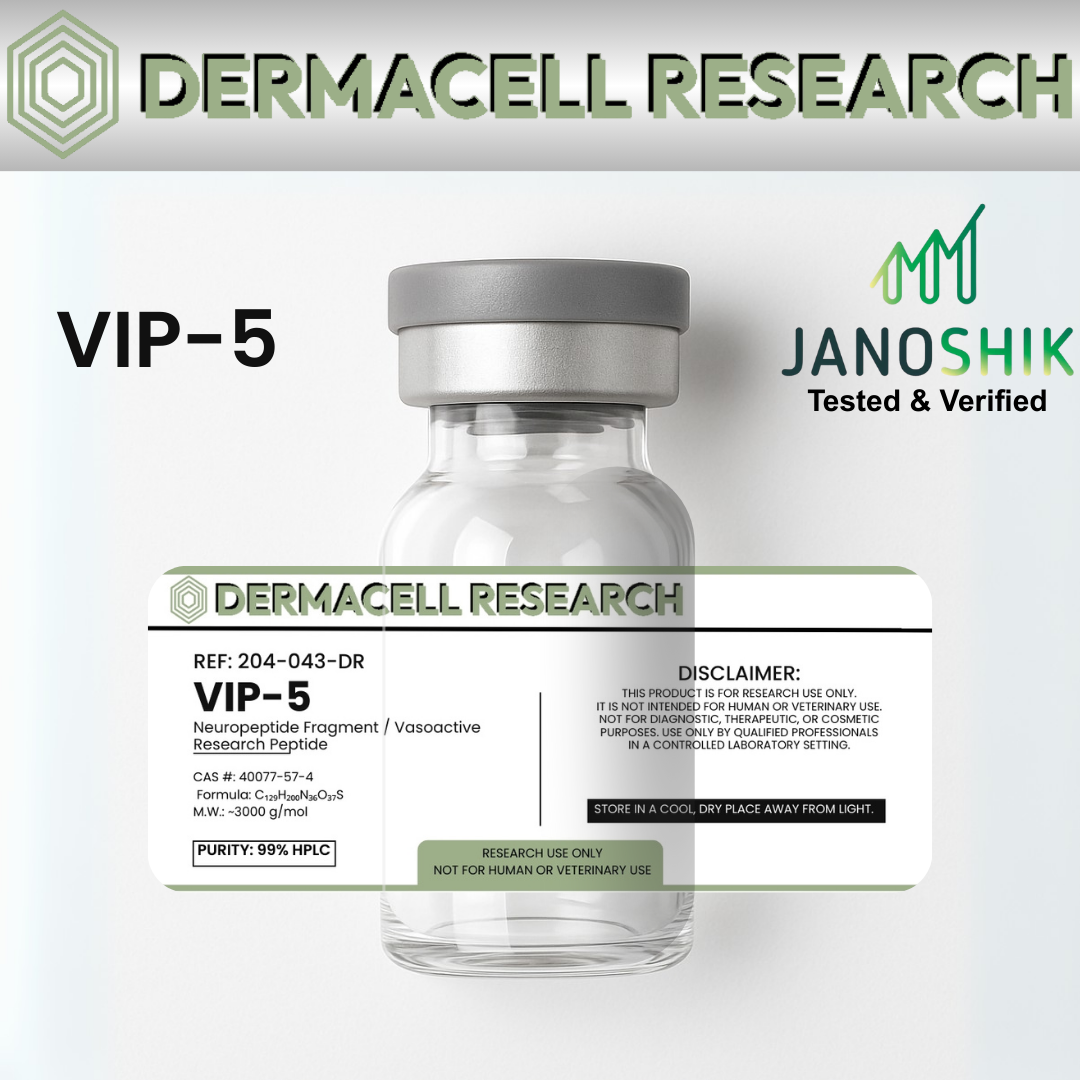
VIP-5 is a synthetic analogue of vasoactive intestinal peptide (VIP), a neuropeptide involved in smooth muscle relaxation, vasodilation, and immune regulation. It has been investigated for potential roles in modulating inflammation, protecting neural tissues, and supporting gastrointestinal function.
1. Laburthe M, Couvineau A. Vasoactive intestinal peptide receptors: structure and function. *Biochim Biophys Acta*. 2002;1615(1-2):209–221. doi:10.1016/S0005-2736(03)00167-2
2. Said SI. Vasoactive intestinal peptide in physiology and disease. *FASEB J*. 1991;5(14):2916–2922. doi:10.1096/fasebj.5.14.1683398
3. Gozes I, et al. VIP and related peptides as neuroprotective agents. *Trends Mol Med*. 2003;9(11): 575–581. doi:10.1016/j.molmed.2003.10.001
4. Vaudry D, et al. Pituitary adenylate cyclase-activating polypeptide and VIP neuroprotection. *Trends Pharmacol Sci*. 2009;30(1):41–49. doi:10.1016/j.tips.2008.10.006
5. Prasse A, et al. Inhaled vasoactive intestinal peptide in pulmonary hypertension. *Eur Respir J*. 2003;22(2):273–277. doi:10.1183/09031936.03.00086503
6. Delgado M, et al. VIP regulates immune tolerance by inducing regulatory T cells. *Nat Immunol*. 2002;3(9):944–952. doi:10.1038/ni834
7. Harmar AJ, et al. Pharmacology of VIP and PACAP receptors. *Br J Pharmacol*. 2012;166(1):4–17. doi:10.1111/j.1476-5381.2012.01871.x
8. Said SI, et al. VIP as a cytokine: anti-inflammatory properties in lung injury. *Am J Physiol Lung Cell Mol Physiol*. 2007;293(2):L473–L480. doi:10.1152/ajplung.00045.2007
9. Dickson L, Finlayson K. VPAC and PACAP receptor pharmacology: therapeutic potential. *Pharmacol Ther*. 2009;121(3):294–316. doi:10.1016/j.pharmthera.2008.11.006
10. Abad C, et al. VIP in inflammatory and autoimmune disorders: therapeutic implications. *Mol Cell Endocrinol*. 2011;335(1):9–17. doi:10.1016/j.mce.2010.06.018
2. Said SI. Vasoactive intestinal peptide in physiology and disease. *FASEB J*. 1991;5(14):2916–2922. doi:10.1096/fasebj.5.14.1683398
3. Gozes I, et al. VIP and related peptides as neuroprotective agents. *Trends Mol Med*. 2003;9(11): 575–581. doi:10.1016/j.molmed.2003.10.001
4. Vaudry D, et al. Pituitary adenylate cyclase-activating polypeptide and VIP neuroprotection. *Trends Pharmacol Sci*. 2009;30(1):41–49. doi:10.1016/j.tips.2008.10.006
5. Prasse A, et al. Inhaled vasoactive intestinal peptide in pulmonary hypertension. *Eur Respir J*. 2003;22(2):273–277. doi:10.1183/09031936.03.00086503
6. Delgado M, et al. VIP regulates immune tolerance by inducing regulatory T cells. *Nat Immunol*. 2002;3(9):944–952. doi:10.1038/ni834
7. Harmar AJ, et al. Pharmacology of VIP and PACAP receptors. *Br J Pharmacol*. 2012;166(1):4–17. doi:10.1111/j.1476-5381.2012.01871.x
8. Said SI, et al. VIP as a cytokine: anti-inflammatory properties in lung injury. *Am J Physiol Lung Cell Mol Physiol*. 2007;293(2):L473–L480. doi:10.1152/ajplung.00045.2007
9. Dickson L, Finlayson K. VPAC and PACAP receptor pharmacology: therapeutic potential. *Pharmacol Ther*. 2009;121(3):294–316. doi:10.1016/j.pharmthera.2008.11.006
10. Abad C, et al. VIP in inflammatory and autoimmune disorders: therapeutic implications. *Mol Cell Endocrinol*. 2011;335(1):9–17. doi:10.1016/j.mce.2010.06.018